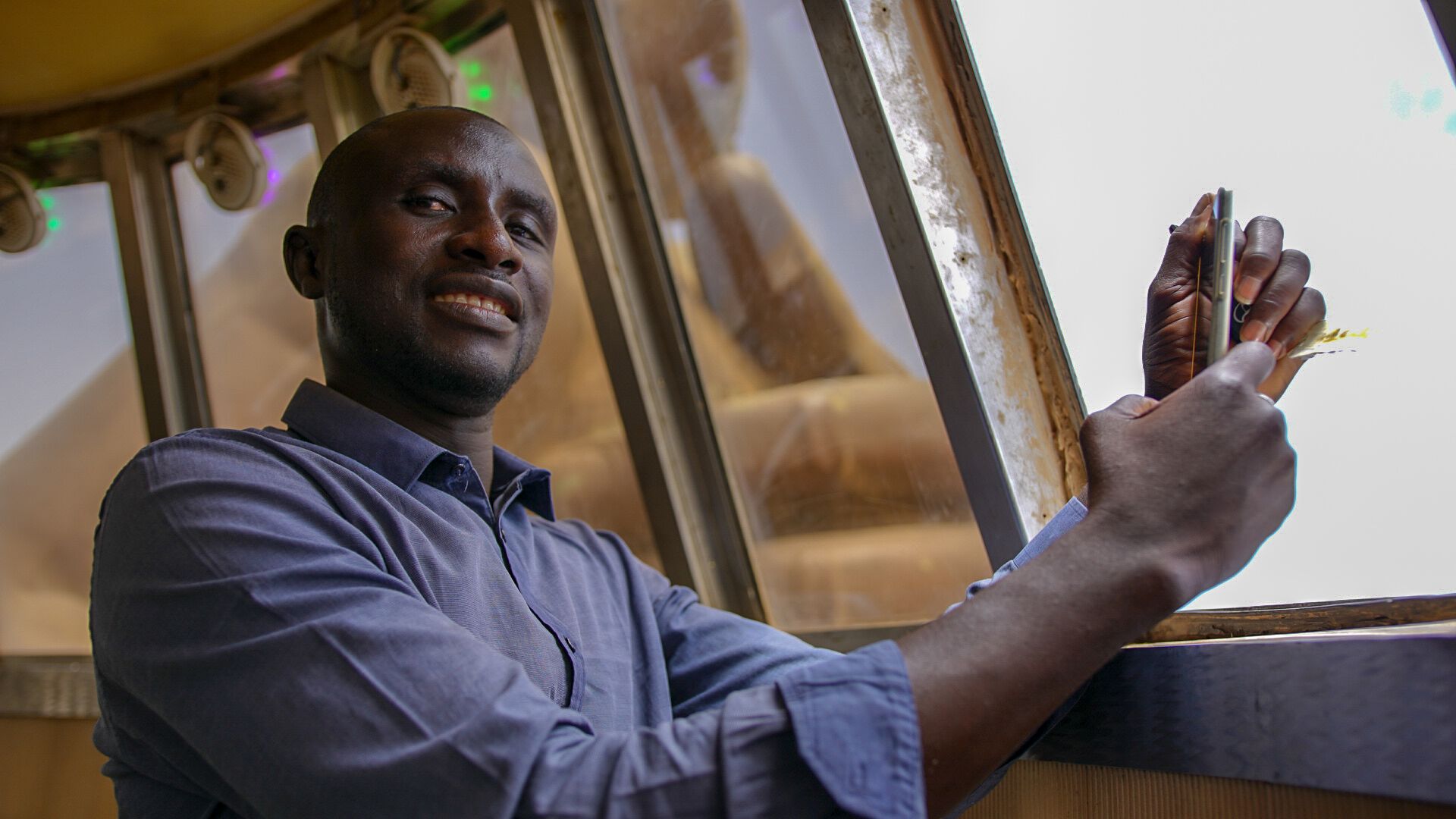
See below for a short background on my bunk-mate Emmanuel, which he has graciously provided me. Emmanuel is a passionate and thoughtful man. Enjoy learning about his story and please consider donating to his fund as he furthers his work experience so he can eventually return home to take care of his family and give back to his community!
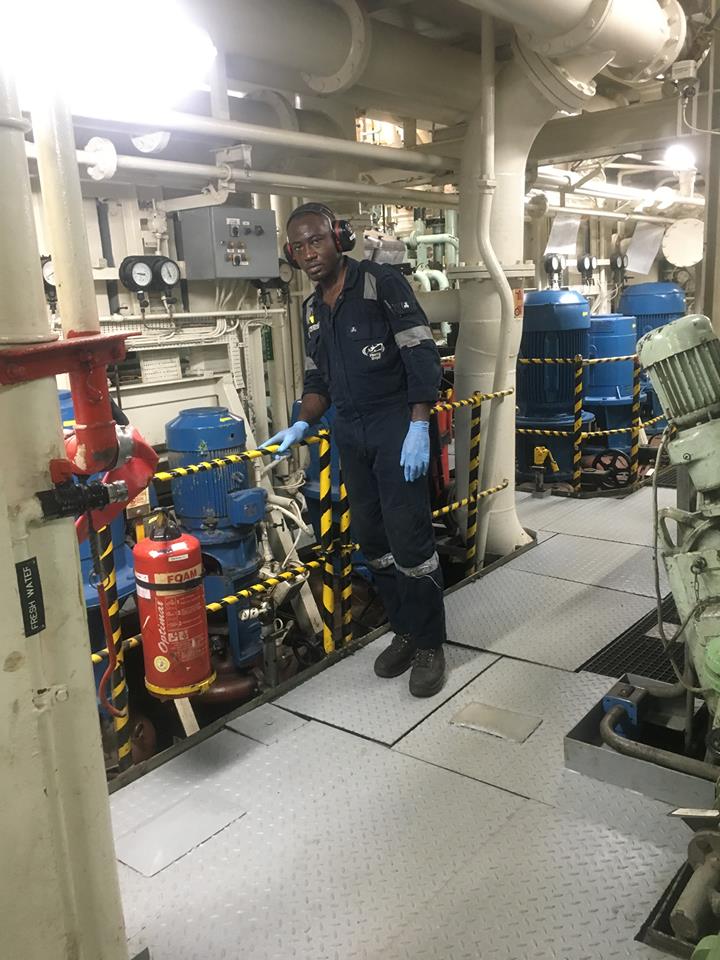
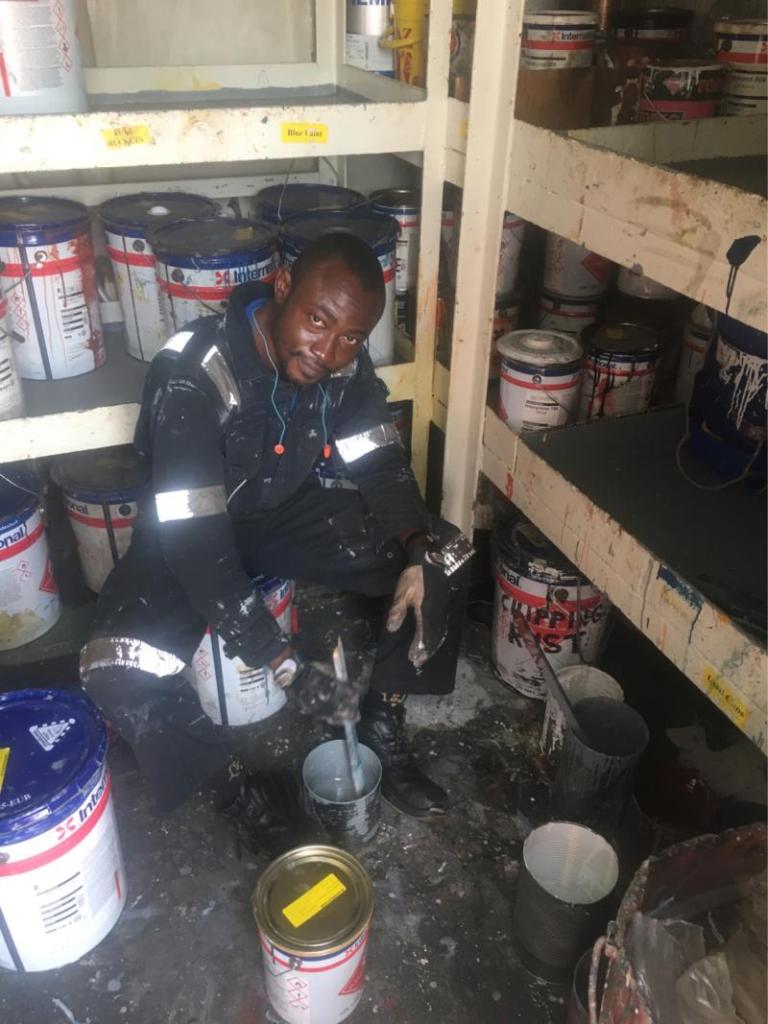
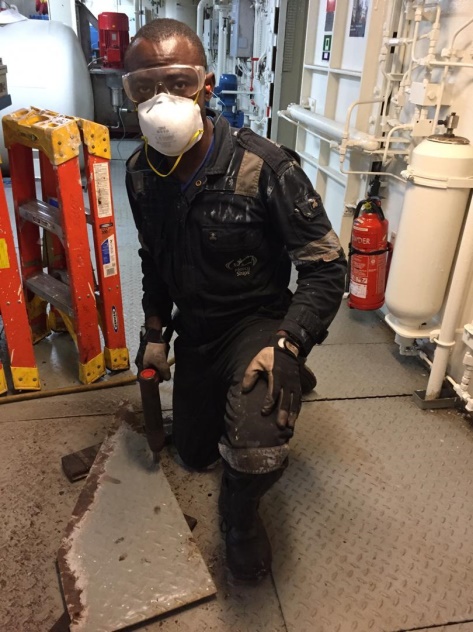
I am the eldest child of Tabakou Maurice, a proud man who worked diligently to take care of his family prior to his untimely demise. Now, the responsibility of providing for our family is left to me. My father’s death changed me in monumental ways. Growing up, I was always passionate about machines and derived great pleasure from fixing things and studying the way they work. While I wasn’t sure how to transfer these interests into a career, Mercy Ships provided a feasible inroad for me to join the maritime industry and gain invaluable experience while also giving back.
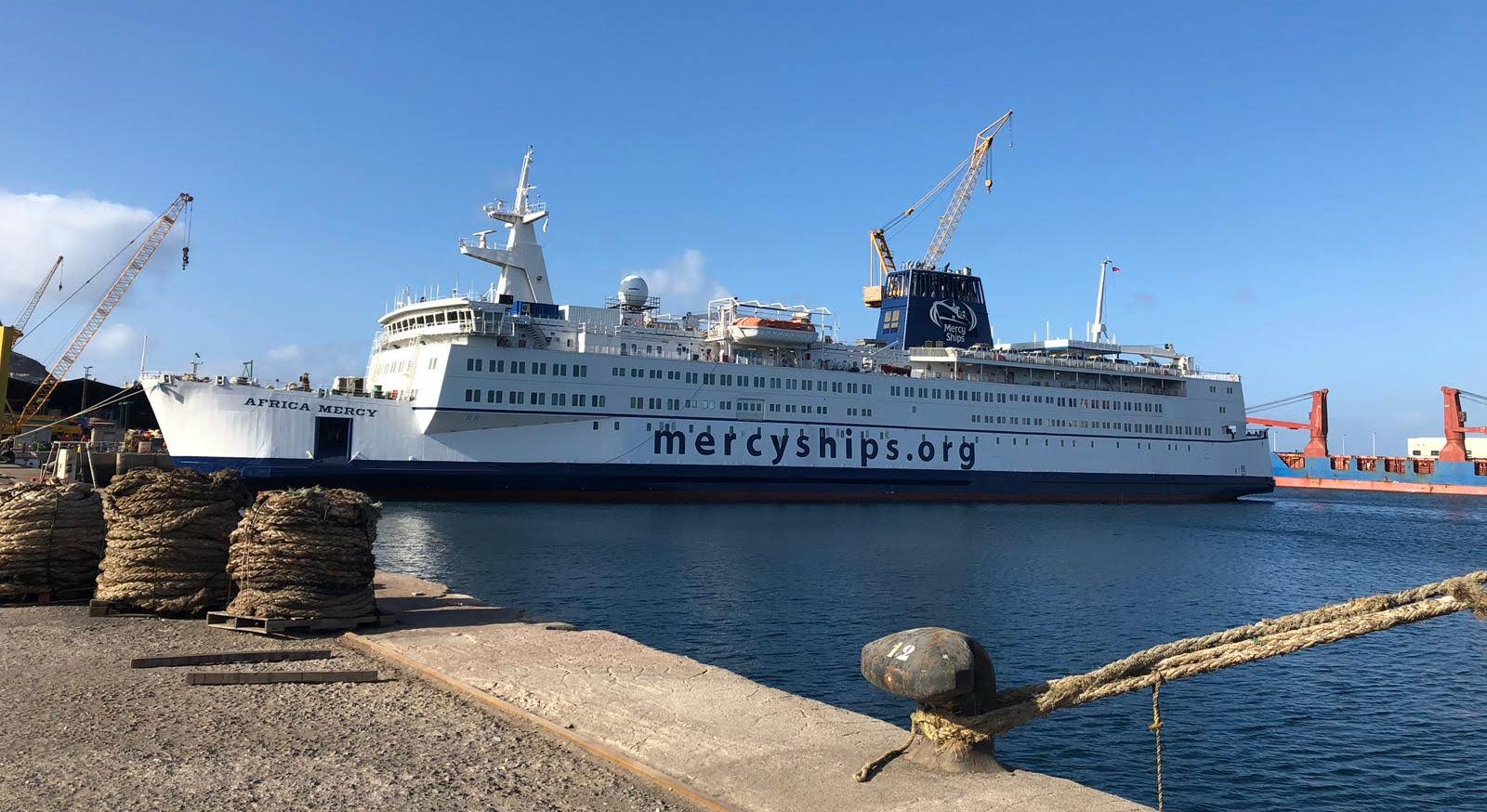
In preparation, I have already obtained the necessary education: a bachelor of science degree from Regional Maritime University (Marine Engineering) and additionally immersed myself into serving God through missions work with Mercy Ships onboard the Africa Mercy vessel currently docked in Dakar, Senegal.
As previously mentioned, my role with Mercy Ships began December 2018 (Guinea, Conakry) as an “Engine Hand” which is an important role in the daily operations of the ship. In 2019, I was promoted to an “Engine Rating.”
Missions volunteers like me must pay to serve. It sounds unique, but most missionaries sustain themselves through the generous funding of people just like you who believe in either our non-profit organization or church. Miracles have kept me afloat through my university studies and the duration of my first field service. I’ve been blessed to witness God provide for me through different people and in ways I never could have imagined.
My passion is solid, my faith is strong, but my coffers are near empty, so this financial appeal is crucial. In order to continue this path, I must raise $12,000 in funding to continue my service through 2020. These funds will help pay my monthly crew fees, required medical insurance, hygiene/clothing/miscellaneous monthly costs, cross-country travel, gifts/offering/tithes.
I am very passionate about my personal mission at Mercy ships and hope you will help me fulfill this mission. Further, I strongly believe God is using this period of my life to teach me how to be selfless and always think of others. My intent is to volunteer at Mercy Ships through 2020, then obtain a job as a marine engineer in Cameroon to help my family members attend university and accomplish their dreams.
Long term, I intend to open a training workshop where I can help train less privileged children to develop skills they can then utilize to contribute to society and provide for themselves and their families. This is economic empowerment, and this is a big part of who I am.
Thank you in advance for your gift and willingness to sow a seed into my dream, advancement of my career, and the Mercy Ships mission.
Some of you may be wondering why Mercy Ships has selected to focus on performing surgeries and building medical infrastructure in developing nations. Below you will find a short video highlighting the need and necessity for access to safe surgery in the developing world.
Hopefully this video has helped to shed light on the necessity for safe surgery. Thank you all for your continued support! God Bless!
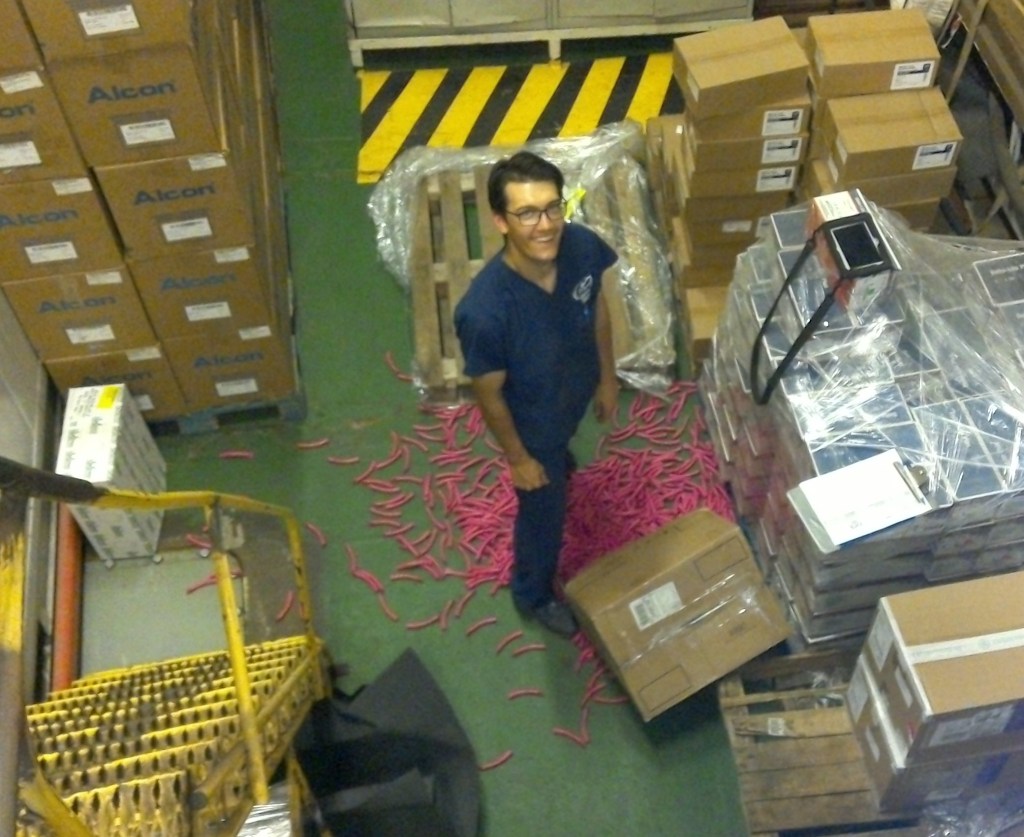
Medical Supply Tip of the Week: Verify received boxes are adequately taped on the bottom before transporting them through the cargo hold. (Especially cases of straws)
Thank you to all my supporters for your continued prayers
and words of encouragement! As requested here are the instructions for sending
mail to the ship.
For letters, postcards, and small packages please use the following address:
Ben Stewart - SupplyMercy Ships AFM - Crew MailP.O. Box 2020Lindale, TX 75771
This shipping method only takes a few weeks but please note that
the cost of delivery is $0.55/ounce so please do not send large packages to
this address.
Large packages can be sent to the following address without a delivery cost but shipping time is approximately 2 months:
Ben Stewart - SupplyMercy Ships AFM - Container15862 Hwy 110 NLindale, TX 75771
For anyone wishing to have something large delivered for Christmas, we have been told packages should arrive to Texas by October 7th.
Thank you all for your continued
support!!!
Here are some photos of some of our first patients and doctors at work!
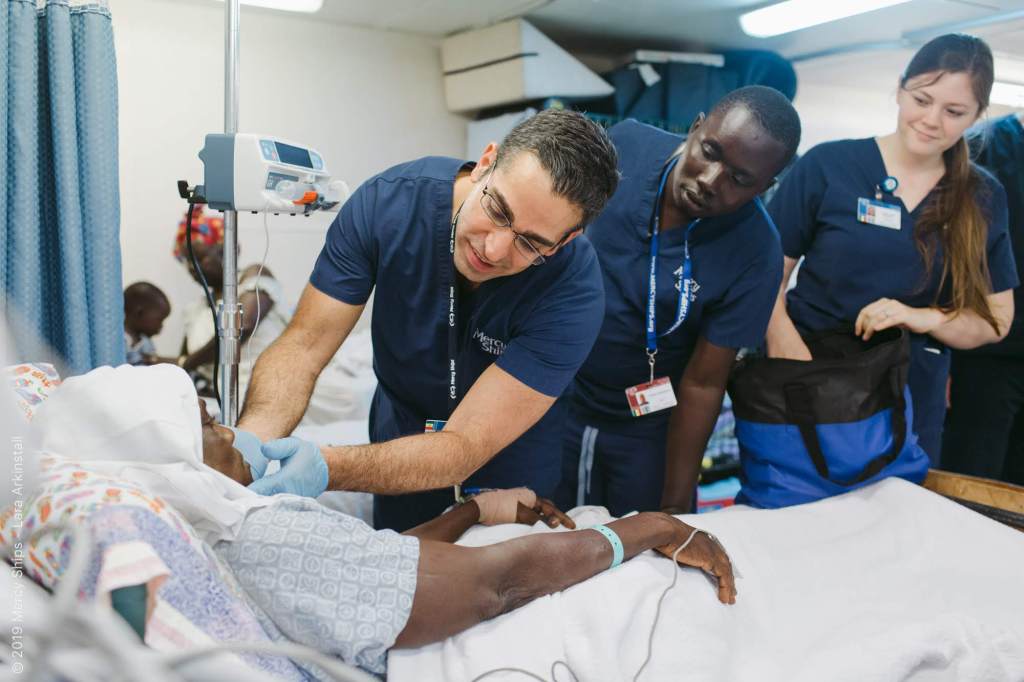
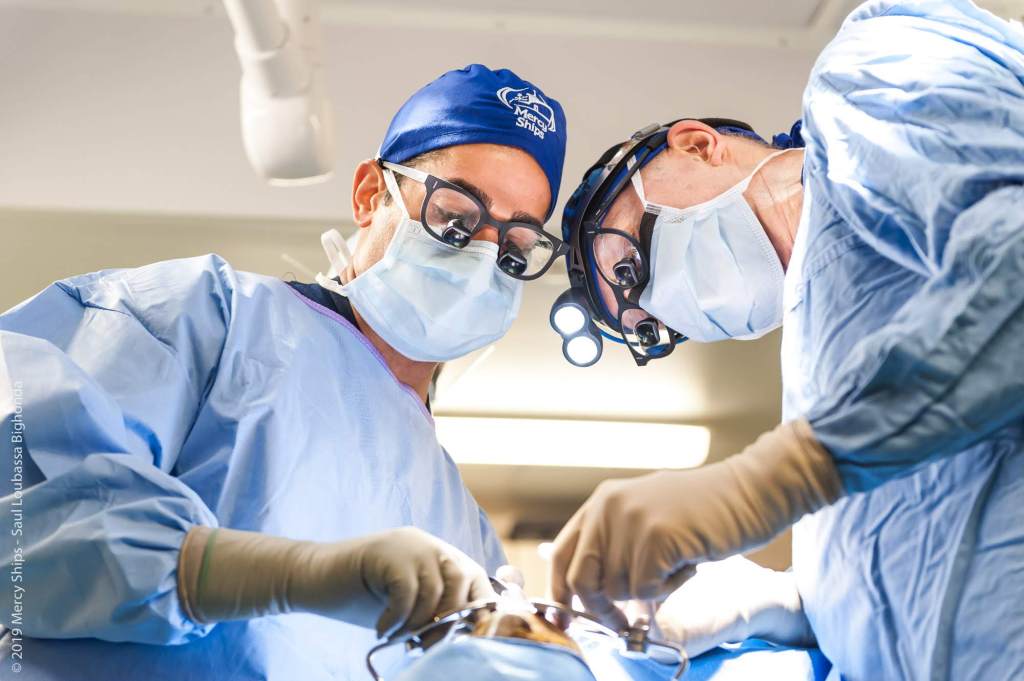
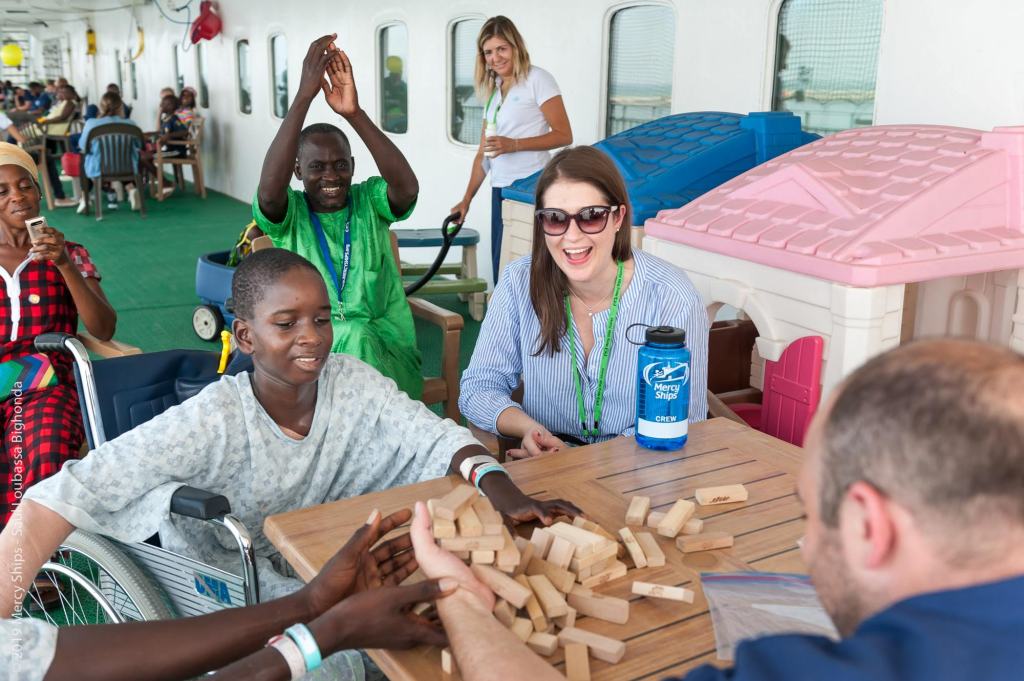
Gary Parker, Chief Medical Officer, examining cleft lip patient, Saliou, in the wards.Payam Afzali, Maxillofacial Surgeon, doing his rounds in the wards before surgery.MaxFax surgeon Payam Afzali at workUBM worker Chiara Giorgi interracting with a patient on Deck 7
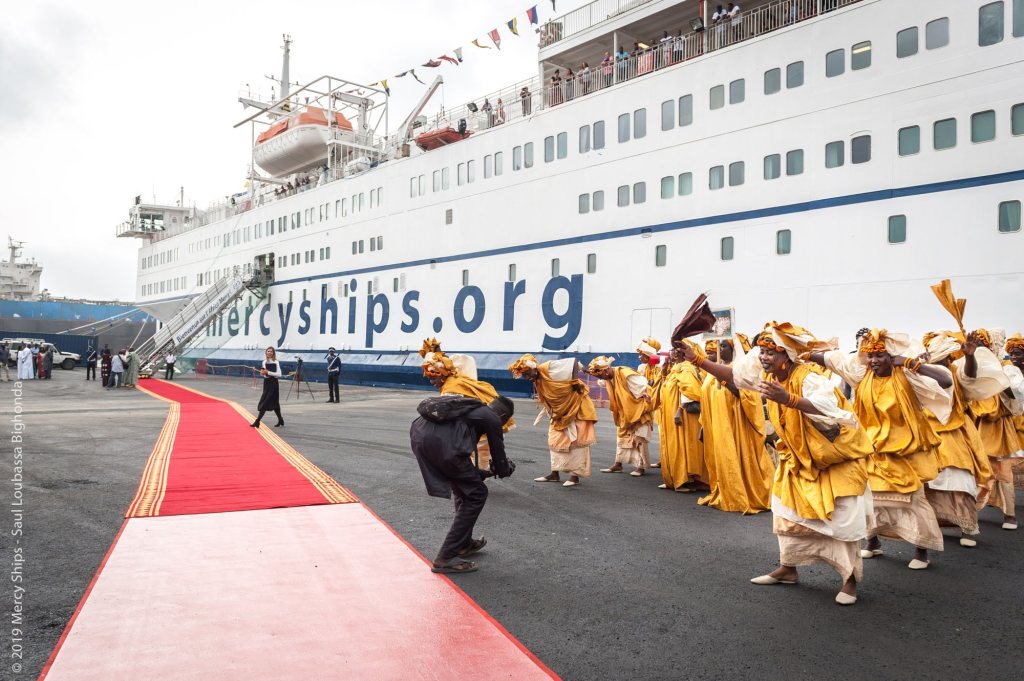
The Africa Mercy all flagged up for the arrival in Dakar
After an exciting month of preparations, surgeries began
this week and it was very exciting to finally witness everything first hand!!!
Crew members wave their flags as the Africa Mercy arrives into the Port of Dakar.Local group Ndaw Rabine performance at the arrival Ceremony
For the last month I have been working to set up the hospital for patients, which mostly involved moving lots of boxes and updating our inventory system in the computer. This week I began my routine that I will follow during most of our field service in Dakar. Now that the hospital is running I have quickly come to learn that my job has multiple perks.
I have access to witness the entire
hospital operation
This is rare, as the hospital is
partitioned and access is limited to certain people on the ship depending on
their department. I get to see all aspects of work onboard the “Hospital Ship”,
including witnessing extreme transformations up close. I see the patients as
they are admitted to the ship, as they are prepared for surgery, following
surgery, and after they are released from the hospital ward. Apparently I will also have the opportunity
to watch a surgery in person, not sure if I will take that offer though.
I get to interact with patients on a daily
basis
My job has me restocking the hospital wards everyday. The wards are where the patients stay before and following surgery. The cabinets I have to restock are behind the patients’ beds which means every cabinet I stock comes with a patient interaction. Patients are restricted to a portion of the ship for their safety & privacy which prevents most of the crew from ever coming in contact with them.
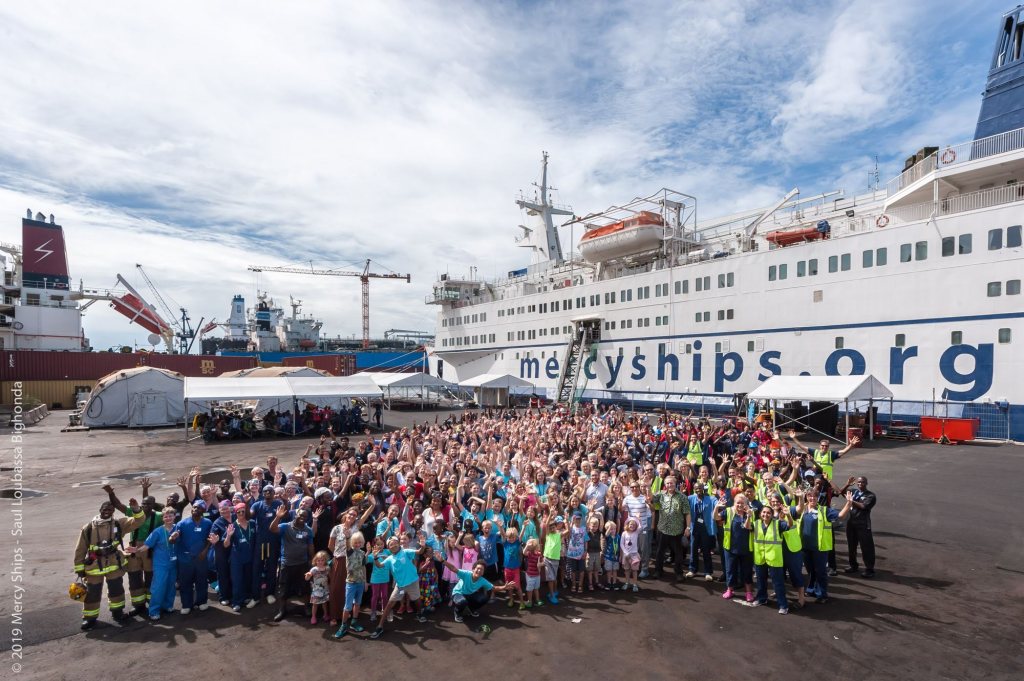
All Africa Mercy crew on the dock
Going into this job I was unsure how I would handle such an
increase in personal interactions. Despite what you may have heard, us engineers
are not the most social of beings. This job has increased my daily personal
interactions to increase exponentially from when I worked in my office of (4) engineers
in Montana. Not only has the quantity of interactions increased but also the
complexity due to the numerous languages and cultures involved on the ship.
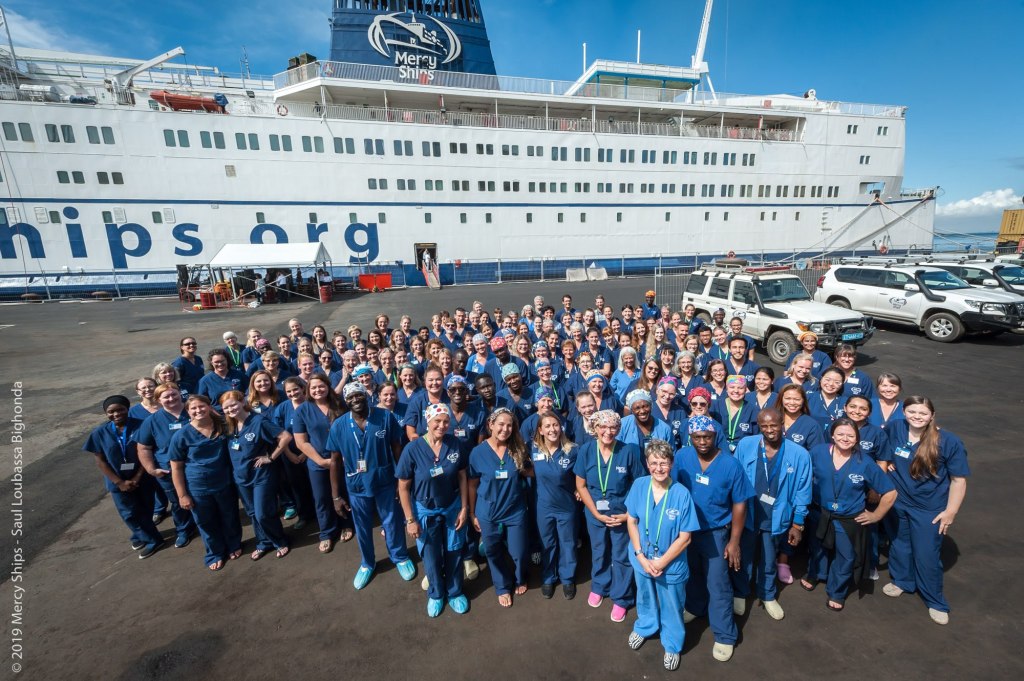
All Africa Mercy Hospital crew on the dock
So far I am happy to report that my coworkers have been joys to work with and I greatly look forward to my future interactions with patients. In fact one of my greatest joys has been greeting patients in the hallways and in their rooms. My coworkers all speak wonderful English but this is not the case with our patients. Despite the language barrier I have found that a simple smile and a greeting in their local language, Wolof, brings a big smile to their face and in some cases, laughter. I am choosing to believe they are laughing with me rather than at me.
It is of note that many of our patients suffer from disfiguring conditions and some have been socially ostracized by their family and peers. In these cases a simple greeting goes a long way to acknowledging the person behind the condition they suffer from. I look forward to learning more Wolof so I can more effectively communicate with our patients and hopefully contribute to their healing process as many of our patients require restoration beyond their physical conditions.
Outside of work I have had the chance to explore Dakar and
have found it to be a wonderful city full of excitement and friendly
people. The people here are very warm
and welcoming. It is true that some people only speak to you so that you will
eventually go to their shop to inspect their wares but just as many people have
genuinely welcomed us to their country.
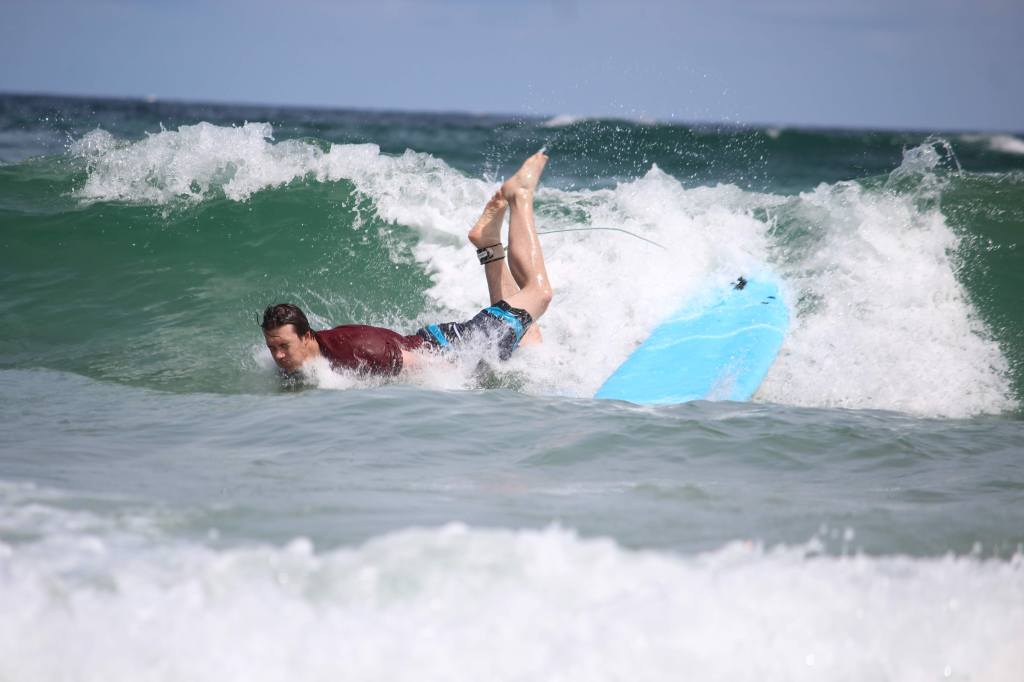
I tried surfing for the first time
This first month has been a whirlwind of transition and I
welcome the new routine of hospital operation.
Thank you for all your continued support of thoughts and prayers.
During our field practice we had the opportunity to get away
from our various service projects to explore some of the sights in Dakar.
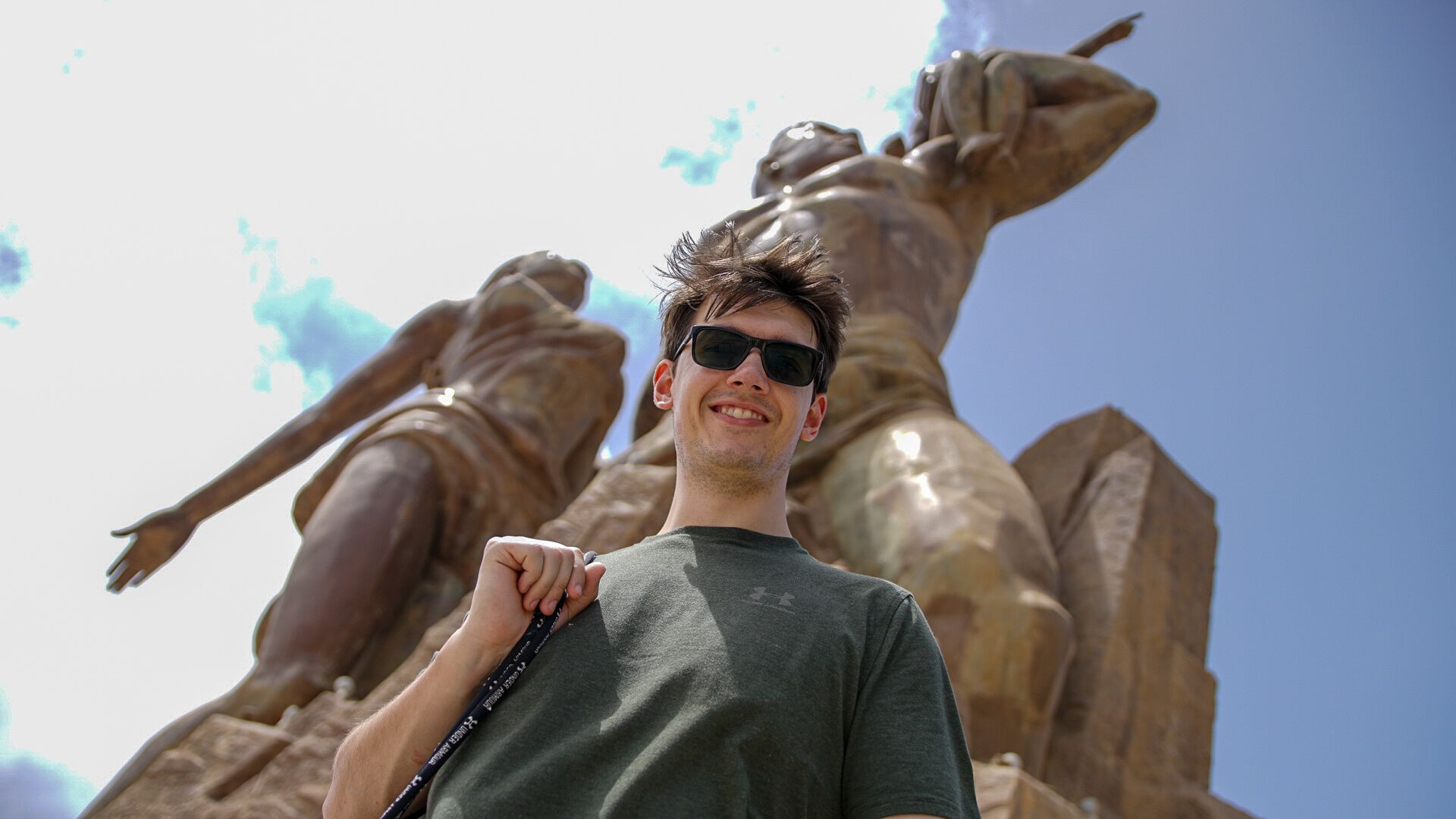
Our first trip took us to the African Renaissance Monument, the
tallest statue on the continent of Africa. This statue was finished in 2009 and
was built as monument for all African people.
Our trip to the statue included walking the many steps to the plaza surrounding the statue. We then took a tour through the museum inside the statue and rode the elevator to the viewing room located in the man’s head.
Our tour guide with some mannequins displaying different parts of tribal culture. (Ancient beekeeper shown here)
Some fun facts about the African Renaissance Monument:
The statue stands at 49 meters, 3 meters taller
than the Statue of Liberty.
The statue was fabricated in North Korea.
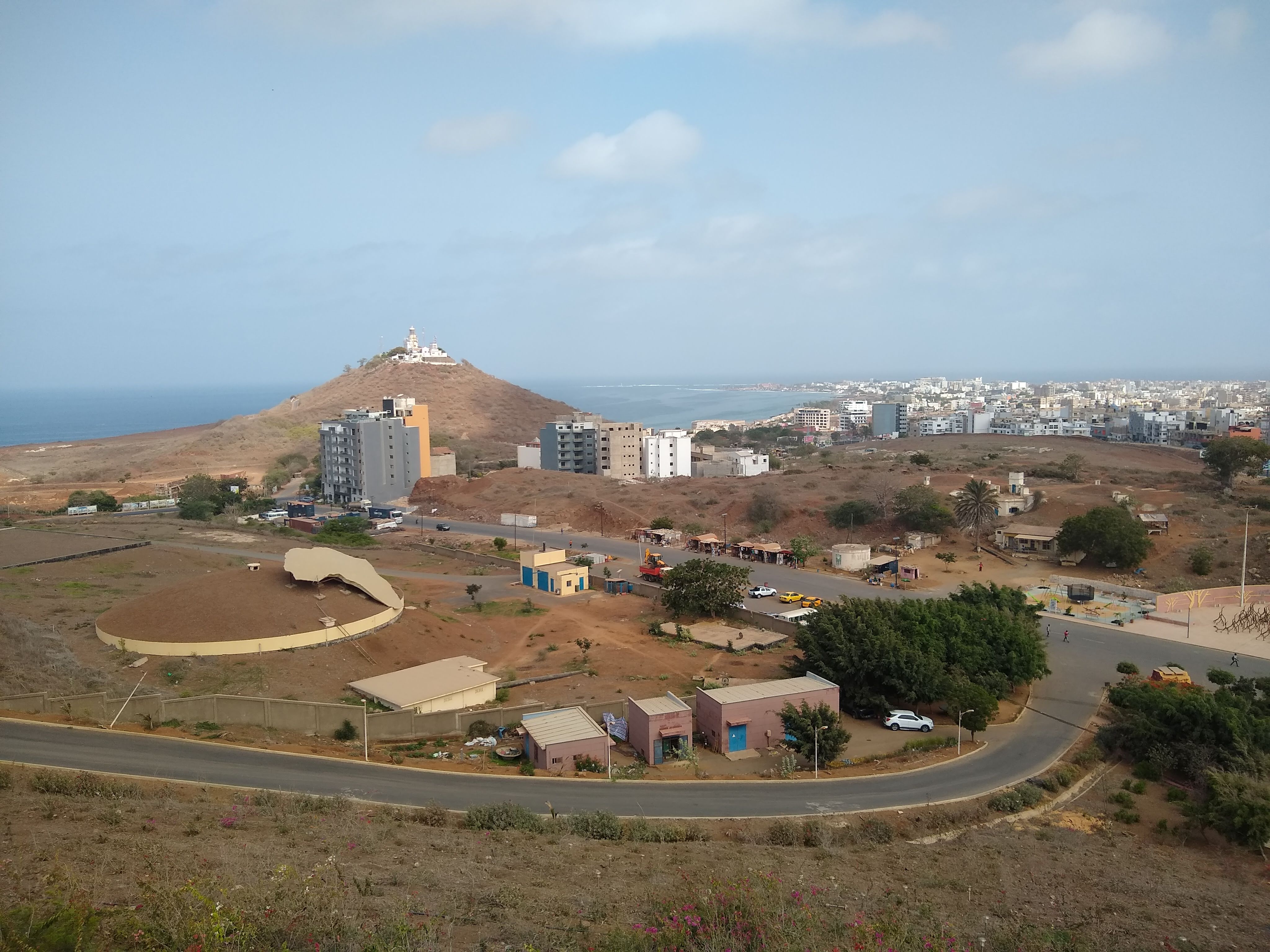
The statue and lighthouse are located on a pair
of hills near the coast. These two hills
are the highest points in all of Senegal and are known as the Deux Mamelles or
in English, the Two Boobs.
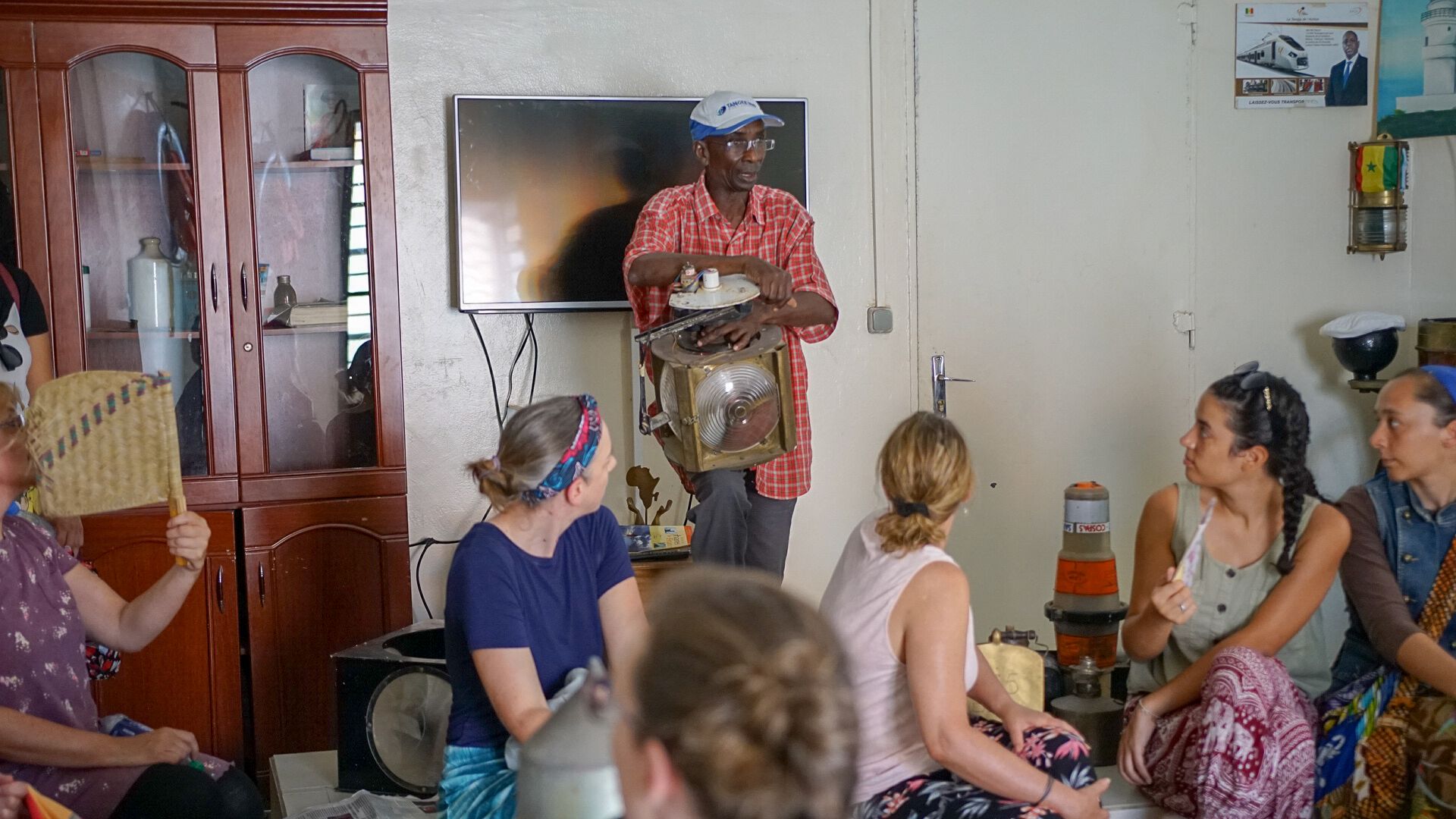
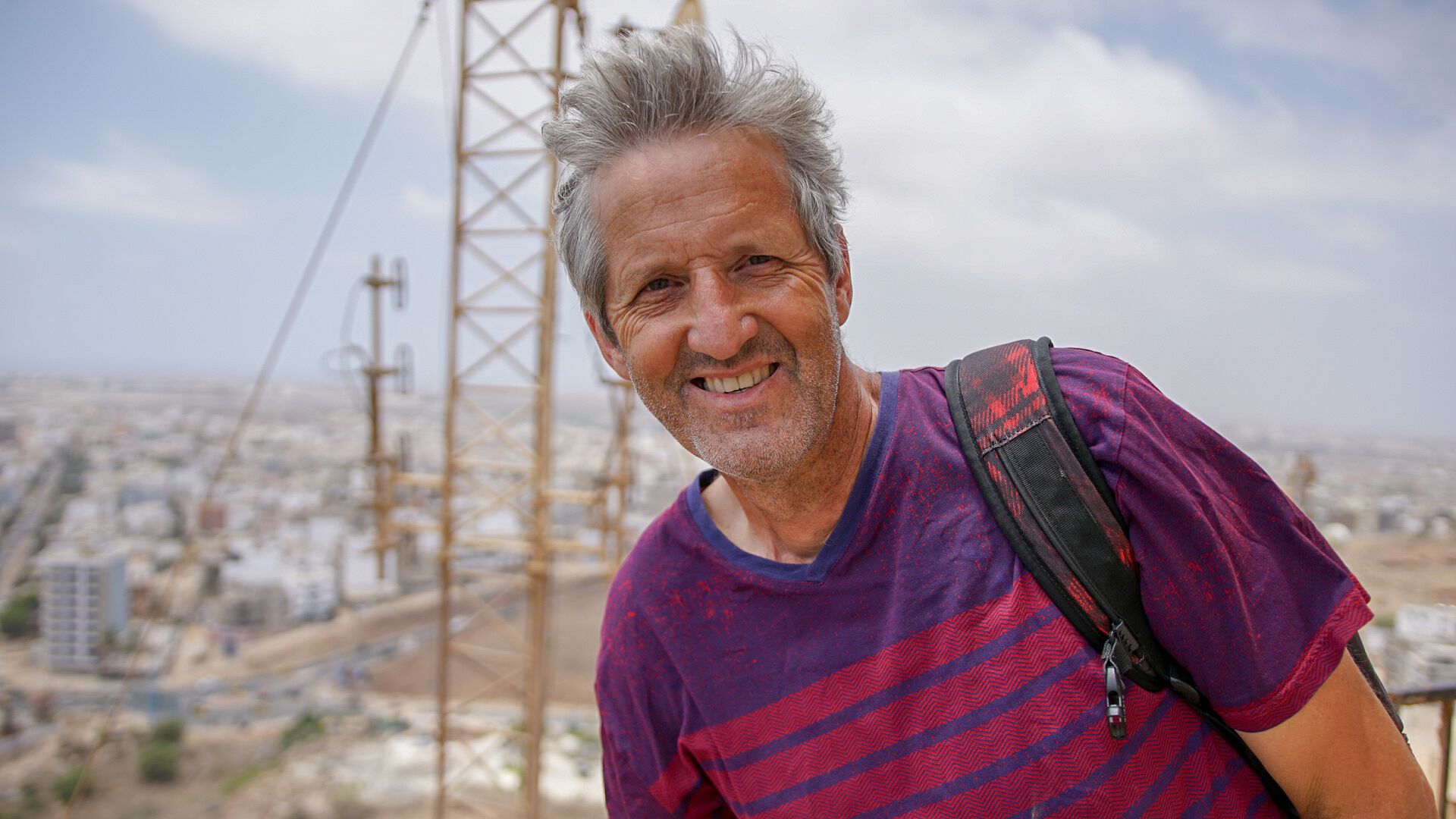
Our second trip took us to the Les Mamalles Lighthouse. This
was very interesting. Due to the location on the westernmost point of Africa,
this lighthouse has been essential for transatlantic navigation of vessels
acting as a gateway between the West and Africa/Europe.
We were given a guided tour of the lighthouse by a very informative
and hilarious guide. We were given information on the history and provided the
opportunity to see the beacon and climb to the top.
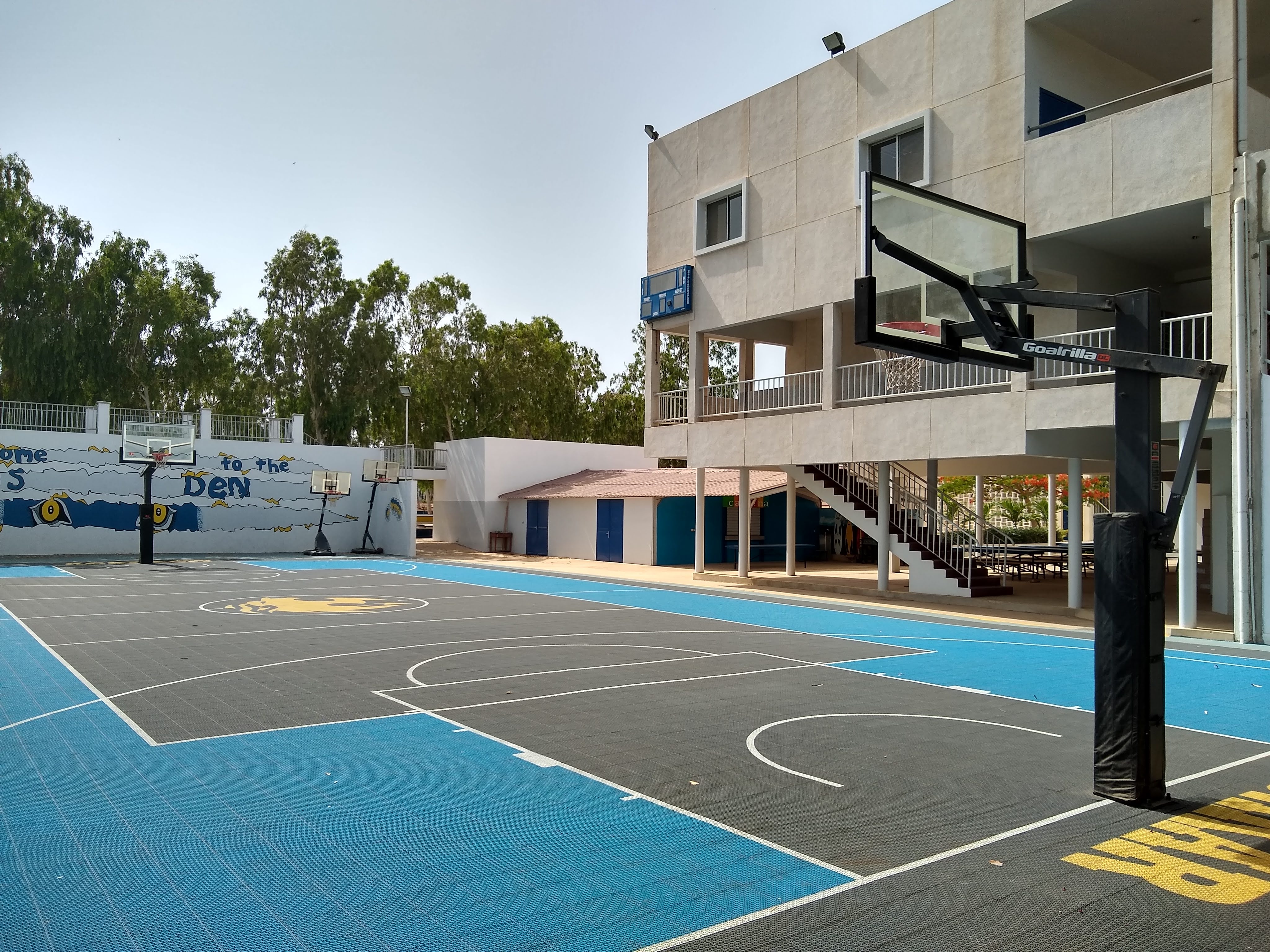
Our last trip was to the main campus of the Dakar Academy. Here
we were given a tour of their facilities including the main building, dorms,
and athletic facilities. The campus was
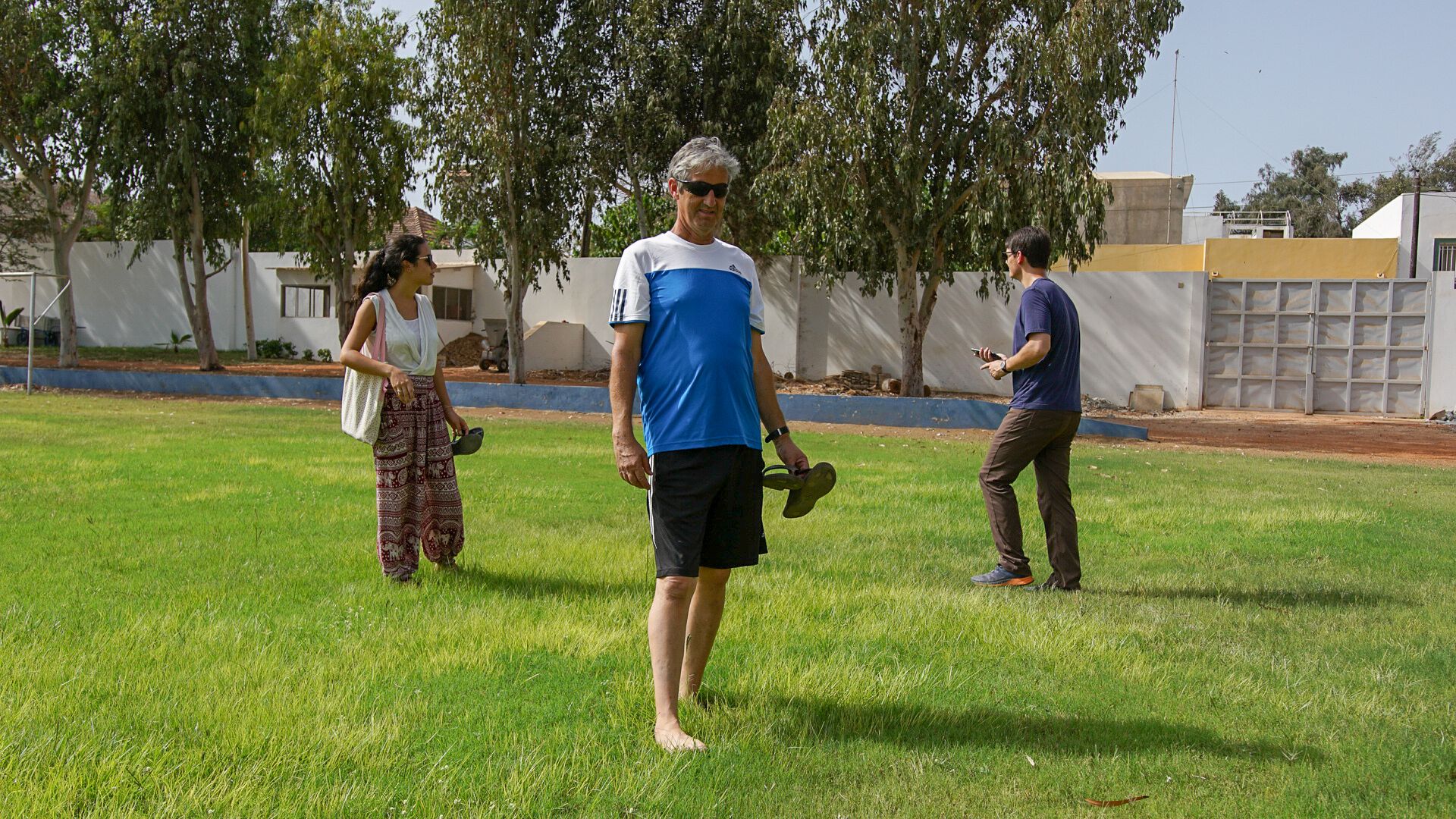
very nice and was a welcome site they had a large grass field. It had not hit me until I walked on it that I
had not seen a grass field since we left the USA.
The Dakar Academy has approximately 200 students enrolled
each year and also serves as a boarding school for some students whose families
reside elsewhere in Africa. I imagine our academy on board the ship will be partnering
with the Dakar Academy for social gatherings during these 10 months in Senegal.
These trips were welcomed excursions outside our guest house and I look forward to many more excursions into the city during this year.
Thank you for your continued support, prayers, and messages!
Better late than never, here is a summary of what took place during my first mini-trip to Senegal in July. The internet has been upgraded so stay posted on some “catch-up” posts from when the internet was either poor or non-existent.Disclaimer: If you like the photos they are probably from one of my teammate’s, most likely our photographer/videographer Micah Coltman.
On July 14th a group of 23 people from my training group departed from the Mercy Ships headquarters in Texas for our “field practice” service project in Dakar, Senegal. The primary purpose for this journey was to give us exposure to the Senegalese culture prior to arriving with the ship. This also forced us out of our comfort zones and provided opportunities for team building. Our field practice team was made up of people from the US, UK, Canada, France, Switzerland, Holland, Germany, and New Zealand.
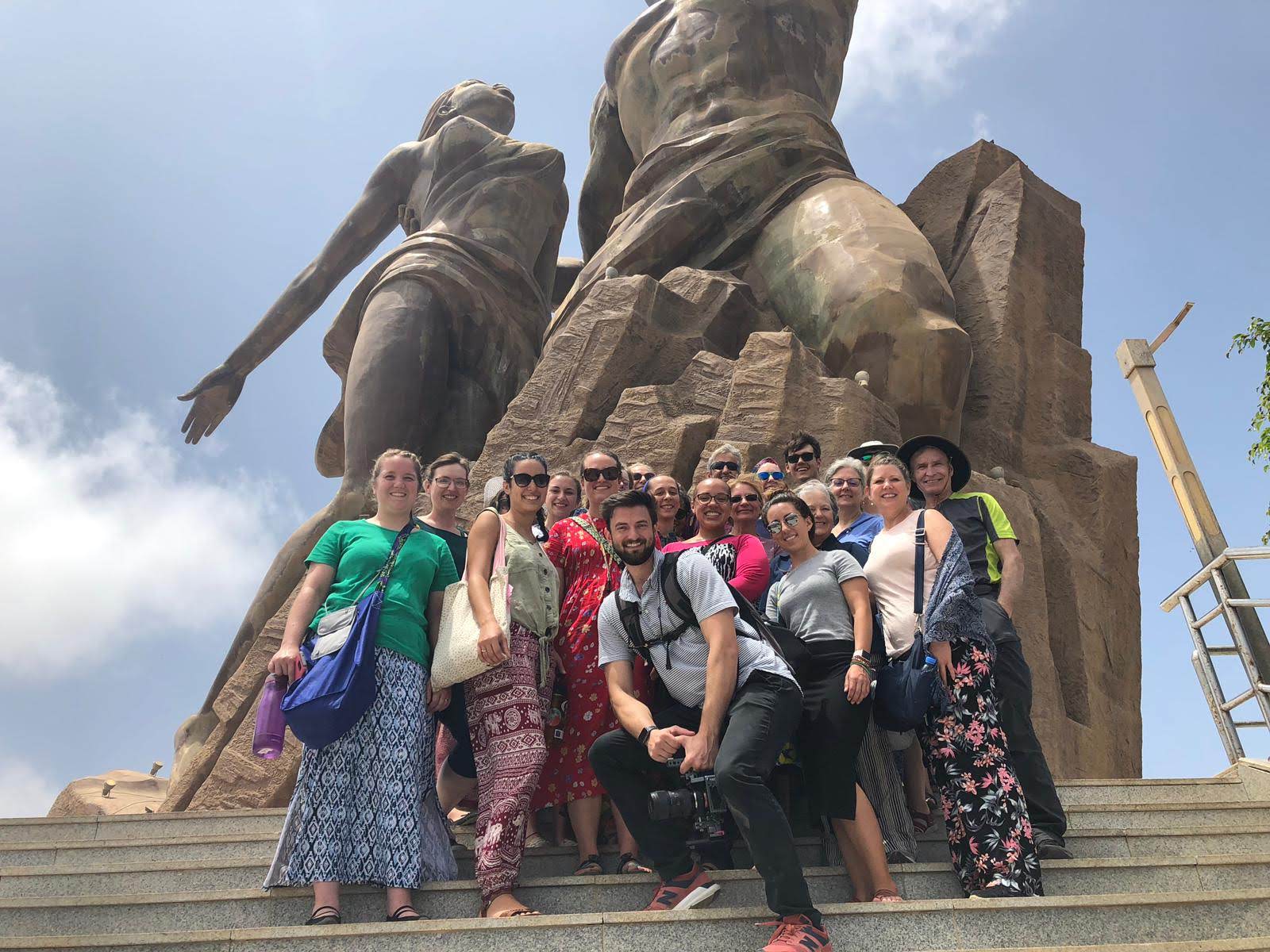
Team photo in front of the African Renaissance Monument
While in Dakar our team worked on several service projects. Most of the service projects were in conjunction with the Dakar Academy, a Christian private boarding school in Dakar for ~200 students. Some of us also worked on projects to prepare the way for the ship. On the weekend we set out into the city and toured the African Renaissance Monument, a lighthouse, and the Dakar Academy main campus.
Our journey was mostly uneventful. We flew from Dallas,
Texas to Washington, DC to Dakar, Senegal. We arrived in the Dakar airport at
6am and were pleasantly surprised to find the airport to be comparable in
quality to most similar sized airports in the US.
Our first minor travel snag came when we had to pass through
immigration. One member of our team
could not locate her vaccination record card required for entering the country.
A group of us aided our travel companion by dividing the contents of her bag on
the floor, eventually we were able to comb her belongings and locate the
document successfully.
The next issue was that the immigration officials had trouble admitting the two New Zealanders from our group into the country. Both Kiwi gals were required to step aside to fill out additional paperwork while the rest of us passed through immigration with little more than a glance at our passports and a random finger print check. As a side note, throughout our time in Senegal whenever “New Zealand” was mentioned we were met by smirks, giggles, and laughter by the locals. I hope to uncover the mysteries of this joke. The current leading theory is that “New Zealand” means something funny in the local language “Wolof”. I will keep you posted as we work diligently to uncover this mystery.
After everyone was admitted through immigration the last
problem we encountered was that one of our checked bags did not make it off the
plane. We did however get that bag back
later in the week after it was retrieved from Johannesburg.
Upon leaving the airport we were greeted by our fearless German leader, Stefan who had arrived a few days earlier to ensure our accommodations and transportation were in order. We were then packed into rental vans and were given our breakfast of water & fruit. We then began our ~2 hour drive to where we would be staying for the next 12 days.
Our project leader Stefan “Aye Aye Aye” Schmidt
During our drive we had our first taste of Senegal. Our initial observation was that the roads were brand new including storm water drainage systems. As we drove from the airport into town we passed a variety of buildings including brand new modern hotels and abandoned slums. As we got closer to the city the cars on the highway increased until we were in a complete traffic jam for the last hour or so of our commute. The vehicles on the road varied from the occasional german luxury car to oversized buses from the 1950’s with people hanging out the windows and standing on the back bumper. We also saw a few mule drawn buggies. The drivers of the vehicles mostly abided by the lines on the road when they were present but lane changes and merges looked more like colliding schools of fish as the concept of “safe driving distance” was completely foreign. Turn signal lights were only used as hazard lights for slow moving or grouped vehicles. Indicating turns was not a priority. Distances between vehicles during lane changes in many cases would be better measured in inches rather than feet. I am still unsure if that is “good” or “bad” driving. Though the precision was impressive, the amount of damage present on many of the vehicles would seem to indicate the latter.
Eventually we arrived to where we would call “home” for our first stint in Senegal. It was a conference center ran by United World Mission. The adjoining property under construction was a new extension campus for the Dakar Academy where we would do most of our work as part of our service.
Our guest house/conference center is u-shaped building in the lower right corner
After settling in to our rooms we explored the conference center campus and the nearby beach. For dinner that evening we were treated to Senegalese take-out pizza. Which was tasty but tasted a little different from what we were used to.
The next morning we were split into teams for which we would be performing a variety of service projects during our 12 day stint in Senegal. Before starting our projects we were given a quick Senegal primer by one of the administrators of the Dakar Academy. We learned about the basic customs and greetings that would be useful to keep in mind.
The service projects we worked on broke down as follows:
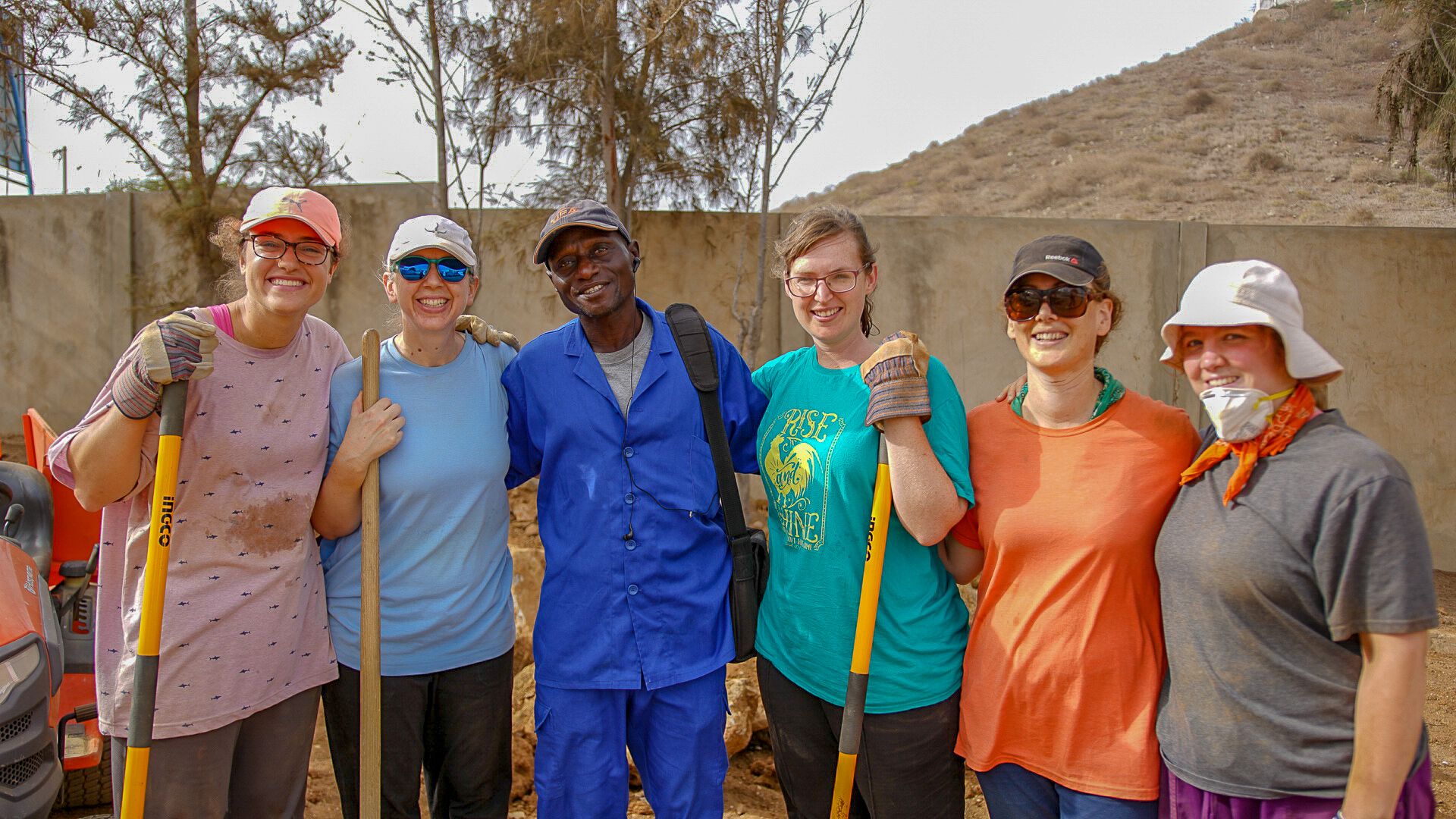
Moving earth by shovel and wheel barrow for the construction of the Dakar Academy West Campus. The earth moved was used for grading various parts of the site including a playground.
Installing false ceilings in the completed classrooms
Moving sand for grading of a stone path & tile floors
Working alongside the housekeepers for the conference center
Assembling furniture for the conference center
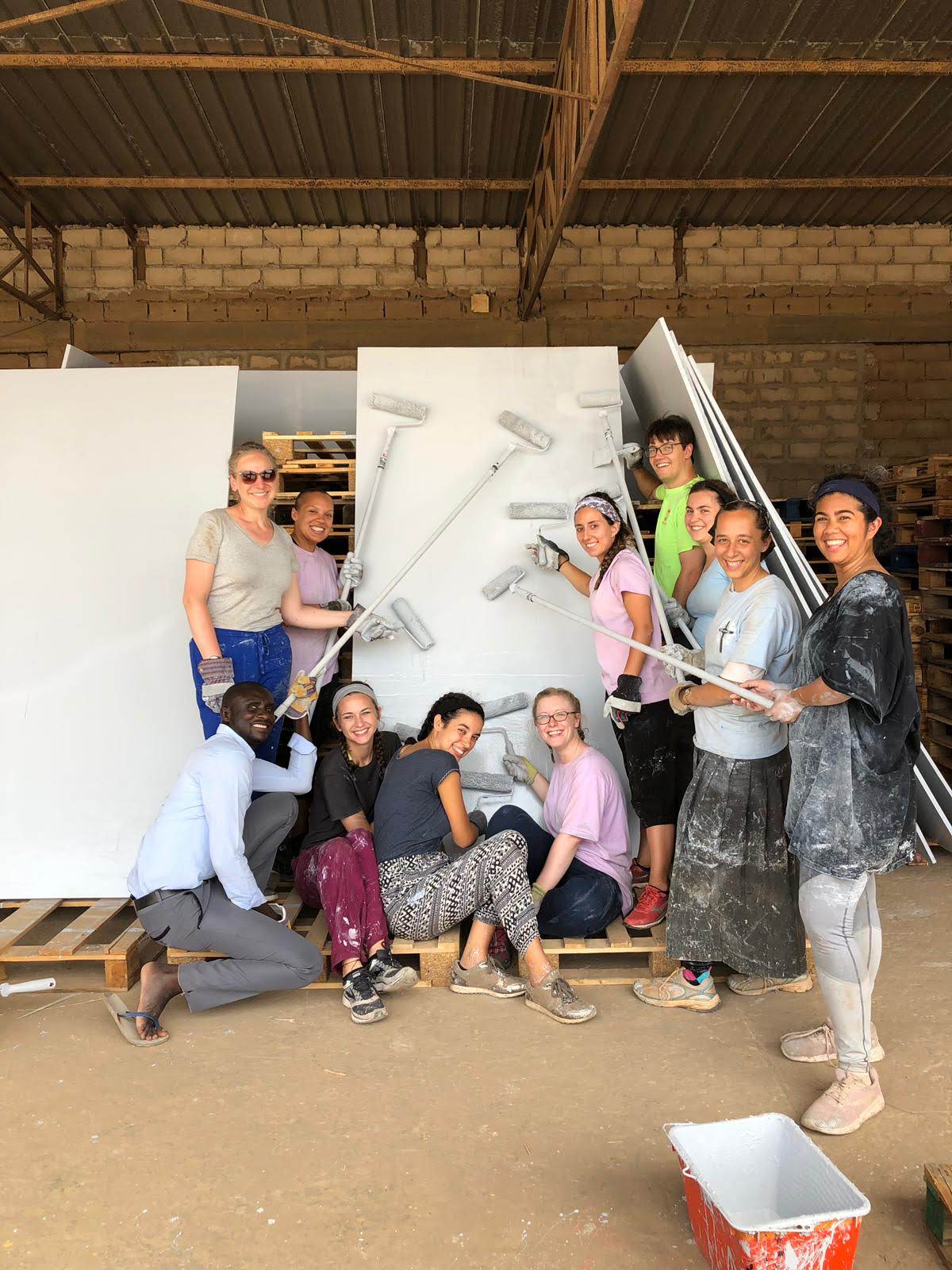
Painting sheets of plywood to function as raised flooring for tent structures at the port where the ship will be stationed
Move furniture and help organize items at the Dakar Academy
Earth Moving Team
Painting Team
Ceiling Team
Our typical work day began at 6:15am where we ate breakfast and prepared a sack lunch. Breakfast and lunch consisted of a combination of baguettes, yogurt, cheese, nutella, peanut butter, wafer cookies, and fruit.
At 7am the painting team boarded a van to ride to the Hope
Center across town where we painted boards. The
Hope Center is the site off the ship where patients who live too far away from
the ship can stay pre/post operation. Shortly after the painting team left
the remaining teams began work on their various projects.
As part of the painting team we had a 20-30 minute commute each morning that was made more enjoyable by our driver, Lamine, who took great pride in his city and would take us a slightly different way each day. He would introduce us to famous buildings and landmarks, all in French, while our French and Swiss team members would translate. Over the 2-weeks in Senegal, Lamine became a true member of our team and even took part in our excursions across the city when we were not working.
Our Senegalese Driver/Painter/Tour Guide, Lamine
Each work day ended between 4-5pm and usually consisted of us taking our showers eating dinner and crashing in our beds but on several occasions we found the energy to go down to the beach or play some card games.
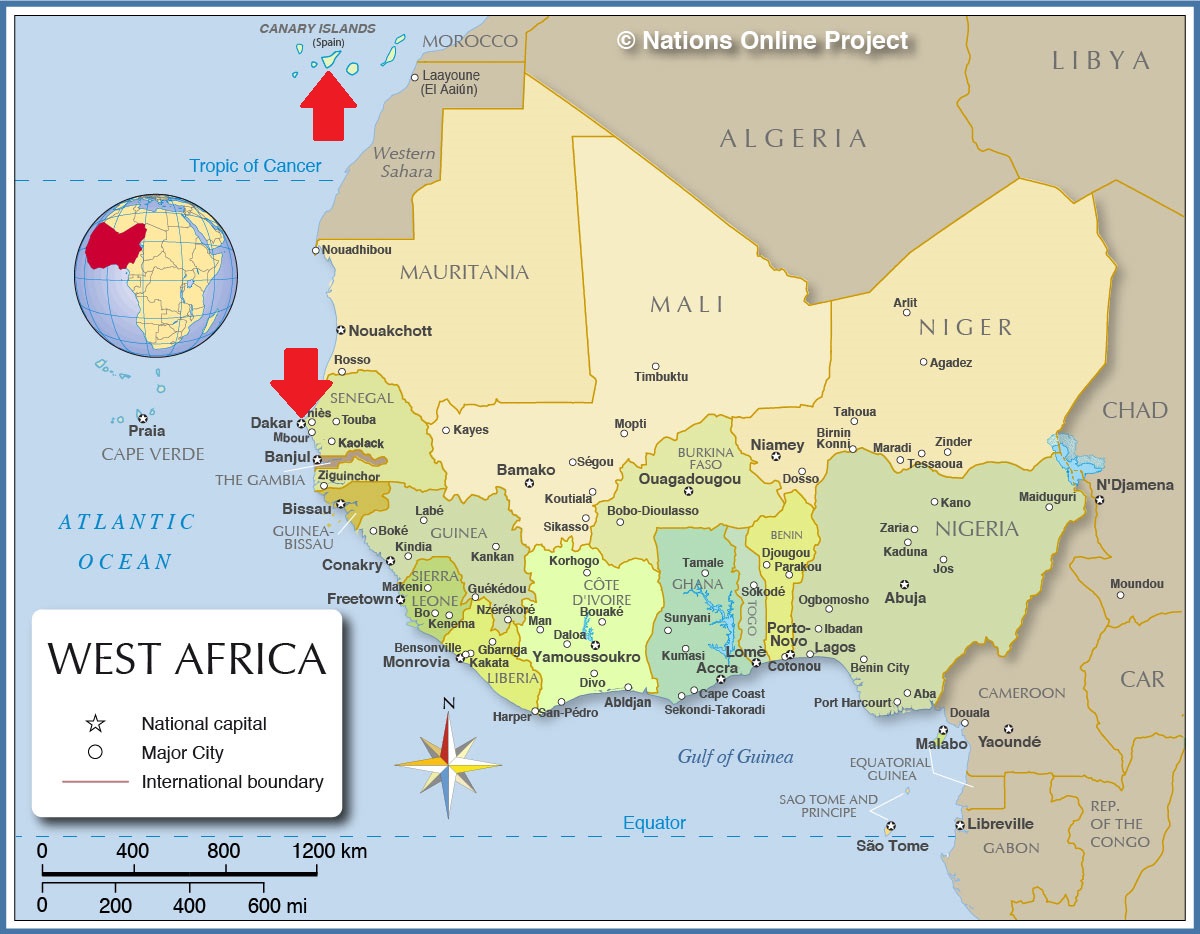
Directly following this time in Senegal we flew to the Canary islands to board the ship while maintenance was completed. Finally arriving on the ship was a welcome relief and a bit overwhelming for many of us after so many weeks of training and anticipation.
These first 12 days in Senegal as part of our field practice were a tremendous blessing and success. This time could have been stressful and tense as we were pushed outside our comfort zones in many ways. Thankfully we made it through this project time without any significant illnesses, injuries, or interpersonal conflicts. Our group grew much closer during this time and the Senegalese culture was significantly demystified.
After nearly two weeks in Senegal I greatly look forward to working with the local Senegalese workers who will join our team on board the ship and I look forward to meeting the people we will serve when the hospital starts up.
Thank you for your continued support! I am excited to witness how God uses the ship to bring hope and healing to the people of Senegal!
After an exciting 2-weeks in Senegal I have arrived aboard the ship in the Canary Islands!
Power and internet are a little inconsistent at the moment as maintenance on the ship is being wrapped up. I will work on getting some posts up summarizing what we did in Senegal, first impressions of ship life, and what our next steps are. So stay posted!
I have successfully completed training and now the bags are packed. We fly out tomorrow to Senegal for a 2-week service project before meeting up with the ship in the Canary islands. After that we will sail down to Dakar, Senegal for our 10 month field service.
FYI – For these next two weeks I will have limited availability. In general the best way to stay in touch with me is WhatsApp or through email. If you have any questions let me know. Once the ship arrives I should be better outfitted for cell reception.
I will have the ability to receive mail on the ship. If you would like to send anything the best way is the address below:
 Ben Stewart - Supply
 Mercy Ships AFM - Crew Mail
 P.O. Box 2020
 Lindale, TX 75771
Training has been a blast and has only made me more excited about this adventure. Please keep our project group in your thoughts and prayers as the next few weeks will be a significant change for all of us. Thank you all for your continued support!
I have finally made it to the last week of training but the fact that I am only days away from flying to Africa has not completely hit me yet.
Training Class Photo
Coming from the beautiful Pacific Northwest, East Texas has been quite the adjustment. In addition to being hot and sticky, seemingly all of nature and the environment is attempting to prevent people from thriving here. Upon my first arrival to campus I was given what I thought was a normal instruction booklet with the typical “need to know” information (Map of campus, Cafeteria Menu, Mail room hours, etc.). Upon closer inspection it should have been titled a “Texas Survival Manual”. A substantial portion of the booklet outlined how not to die during a normal day in Texas. It located the places on campus which had the lowest probability of death during a tornado. Warnings and descriptions were provided for several kinds of deadly spiders. A list of behavioral descriptions and visual identifiers were detailed for multiple types of venomous snakes found on campus. Lastly, a strong warning was issued in the booklet and repeated vigorously by the entire staff, “Always shake your shoes out for scorpions.” This was not stated as a warning but a certainty.
The heat and humidity should have been my first clue. I have found that during a short 5 minute walk across campus the heat and humidity inevitably lead to an existential imperative. I am struck with a sense of dread in knowing that I am slowly dying and if I were to be left stranded in this place I would cease to exist. God bless the people of Texas. It will actually be cooler in Senegal.
Other than the wonderful people I have met, the only redeeming quality I have been able to find about East Texas is the food and it almost makes up for the scorpions. I could be content for the rest of my life sustaining myself entirely off of Tex-Mex and slow cooked meats. Due to diabetes and cholesterol concerns my life would be significantly shorter but I am not yet convinced it would not be worth it.
One of many BBQ feasts
The last few weeks of training have flown by. Overall it has been an enjoyable success. The training sessions have covered a variety of topics including self care, conflict resolution, team building activities, and cultural awareness, all of which I am certain I will call upon during my time overseas.
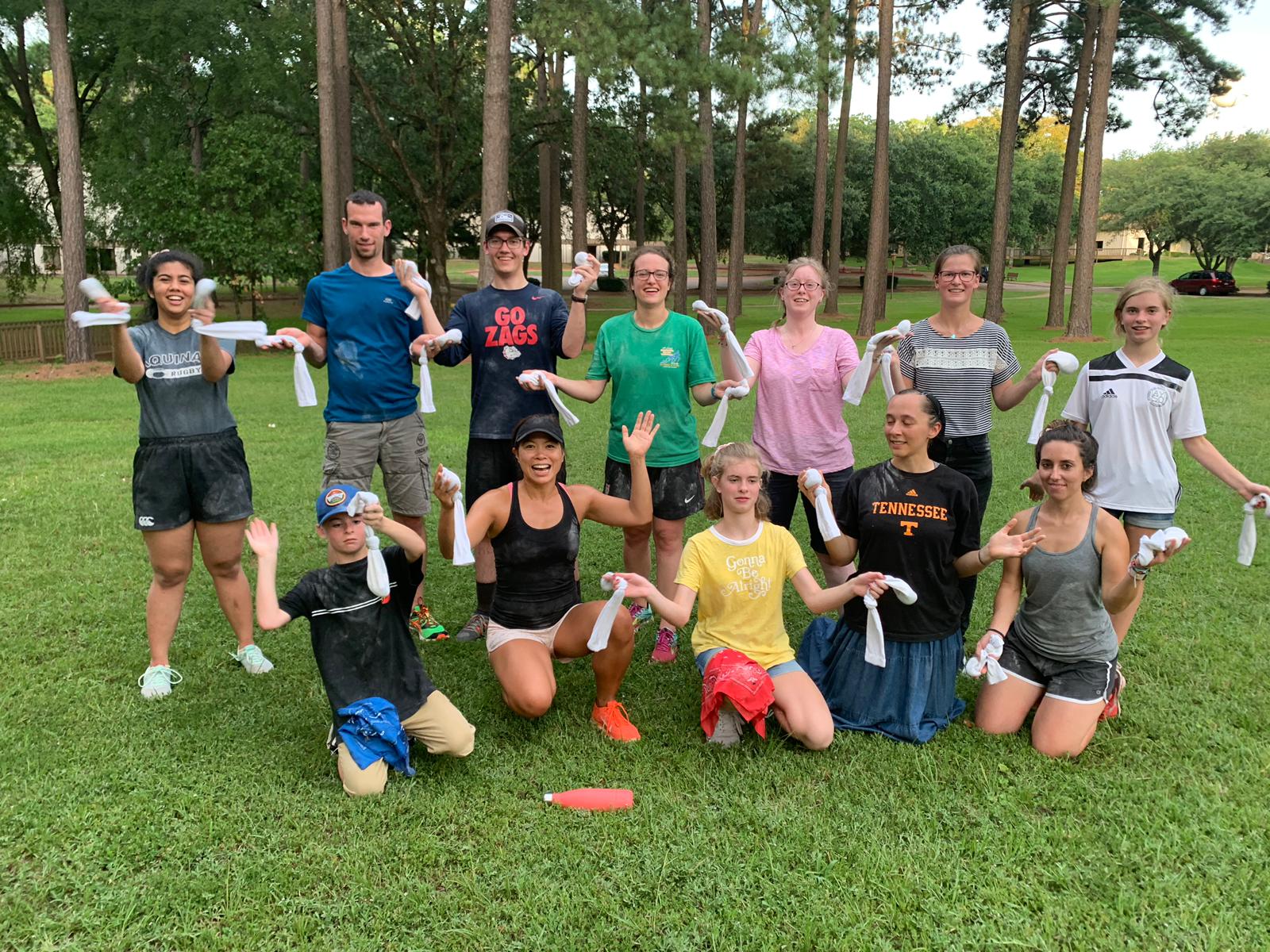
Outside of training, on the exceptionally rare occasion when it has not been 95+ degrees and 90% humidity we have enjoyed to outdoors playing ultimate frisbee, whiffle ball, and capture the flag.
Capture the Flag group photo
I even had the opportunity to get away for a weekend to attend Steve & Amber’s wedding in Missoula!
Steve & Amber’s Wedding!
We fly out Sunday, July 14th for Senegal. Once in Senegal we will have a 2-week field practice to give us a quick taste of life in Senegal. During this time we will work with a school doing some painting and renovation work. Following our field practice we will fly to the Canary Islands to board the ship while it is wrapping up the maintenance cycle. Our 4-day sail to Senegal is scheduled for Mid August.
All jokes aside East Texas has been great. The people here have been wonderful and I look forward to continuing to work with them from across the Atlantic.



























 Ben Stewart